
Technology
Medical radiofrequency technology & system engineering
RF energy enables controlled thermal interaction with tissue for cutting, coagulation, vessel sealing and dermal remodeling. We develop RF technologies for predictable energy delivery, measured tissue response and system-level integration.
A coordinated system
Not isolated components, one architecture.
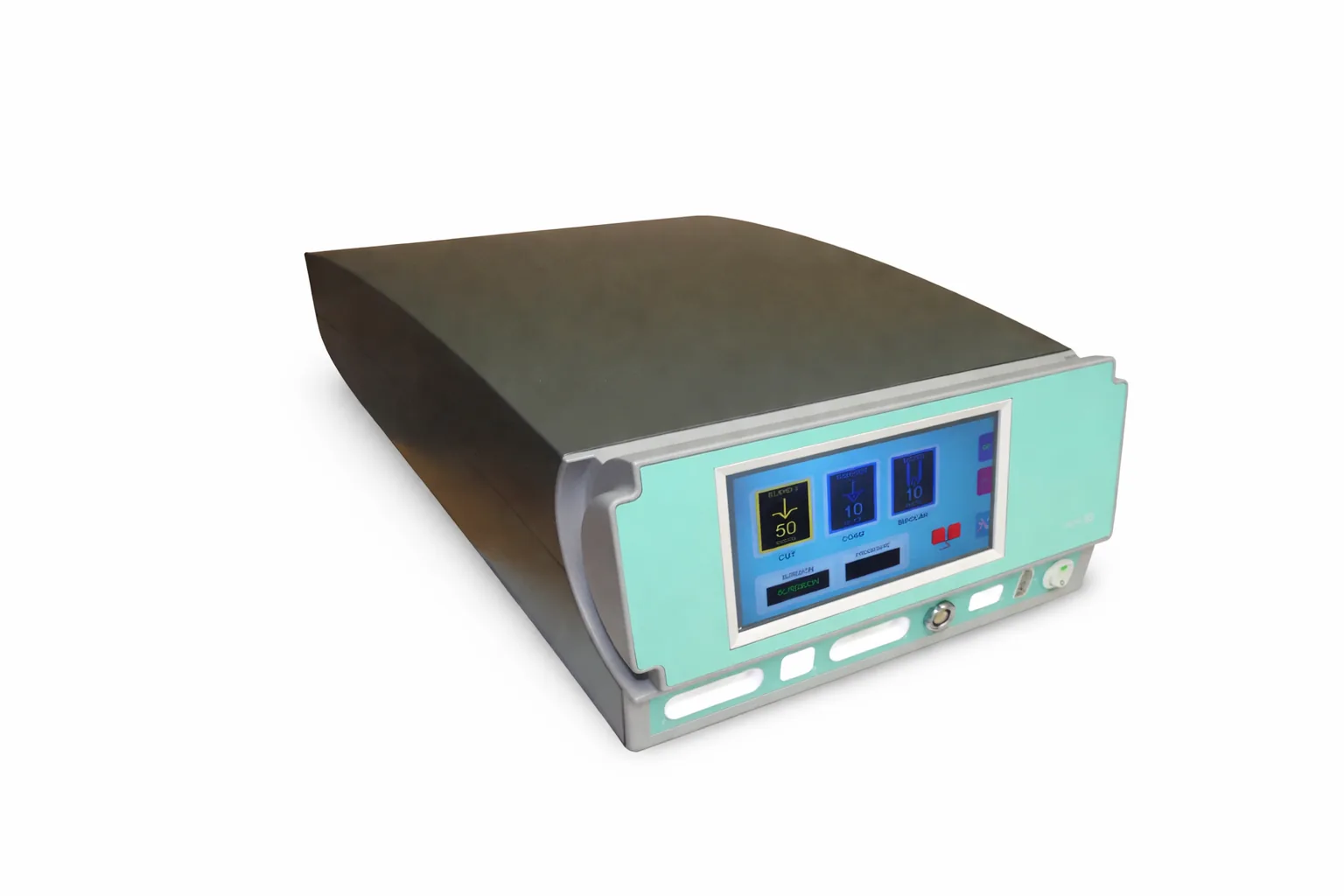
Rather than treating generators, handpieces and instruments as isolated components, we approach RF technology as a coordinated system. Electrical architecture, control logic, materials and interfaces are designed to operate together in a stable and repeatable manner across clinical environments and procedural contexts.
Understanding RF energy
More than nominal power.
RF energy in medical devices is alternating electrical current at frequencies that produce controlled resistive heating within tissue. Delivered through an electrode or applicator, it interacts with tissue impedance to create localised thermal effects.
Waveform
Waveform characteristics shape the tissue effect.
Duty cycle
How energy is pulsed over time.
Impedance response
How tissue resistance changes during delivery.
Feedback
Mechanisms that regulate output during use.
System architecture & control
Closed-loop, measured control.
We design RF platforms at the system level, integrating generators, electrodes, handpieces, return paths and control algorithms into a coherent architecture that supports stable operation, compatibility across device families and consistent behavior under varying clinical conditions. This system-level architecture is implemented across our electrosurgical generators and instruments, including devices such as the Super Pencil, where controlled RF delivery and ergonomic design are integrated into a unified platform.
In select platforms, real-time tissue response data feeds energy control. Closed-loop strategies modulate RF output based on measured parameters rather than preset power values alone, supporting controlled thermal dosing and repeatable performance.
Materials & surface engineering
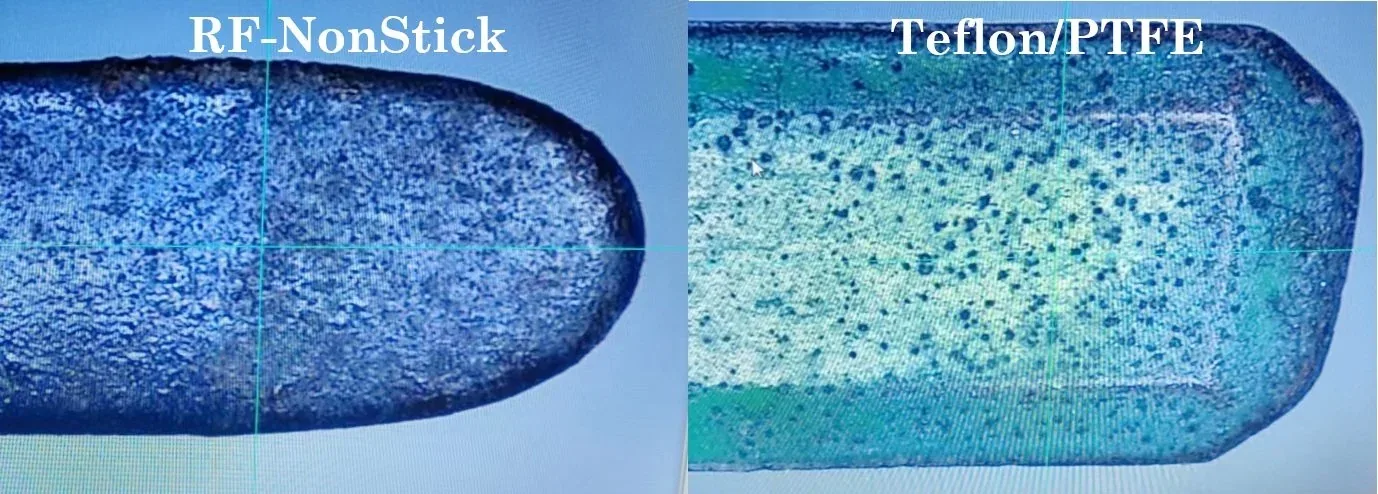
Surfaces designed to resist sticking.
Material selection and surface engineering are central to RF device performance and usability. We develop surface technologies intended to reduce tissue adhesion, manage thermal effects and improve handling during electrosurgery.
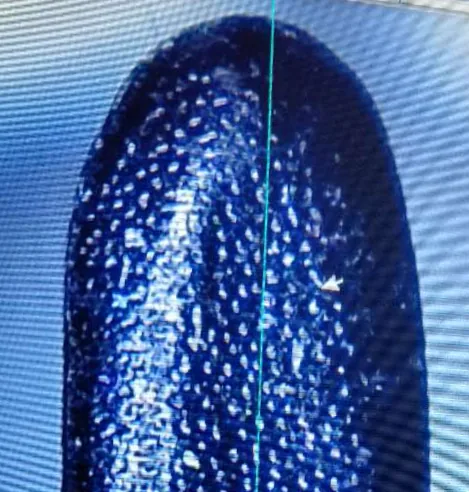
RF-NonStick ceramic coating is one example: applied to select electrodes and instruments, this biocompatible surface treatment is designed to reduce tissue sticking and thermal build-up compared with conventional metallic surfaces.
Read about RF-NonStickApplication across RF platforms
One set of principles, many devices
The same engineering principles adapt their architecture, materials and control strategies to the requirements of each clinical application.
Engineering, quality & ongoing development
Iterative by design.
Technology development is informed by engineering evaluation, testing and manufacturing considerations, guided by performance requirements, reliability and long-term clinical use. Work is conducted under ISO 13485-compliant quality systems that support regulated development and global regulatory pathways.
Talk to our engineers
Discuss an RF platform
Talk to our engineers about RF energy delivery, control strategies and integration for your next device.